Ducati Owners Manual: A Comprehensive Guide
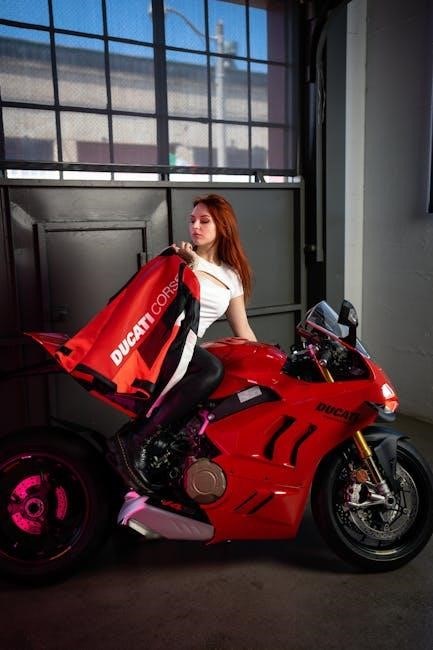
Embark on a thrilling journey with your Ducati! This manual unlocks the full potential of your machine, connecting you with a vibrant community of enthusiasts.
Congratulations on becoming part of the Ducati family! This introduction serves as your initial guide to understanding and enjoying your new motorcycle. Owning a Ducati is more than just possessing a machine; it’s embracing a legacy of Italian engineering, performance, and passion.
This owner’s manual is meticulously crafted to provide you with all the necessary information to operate and maintain your Ducati safely and effectively. Whether you’re a seasoned rider or new to the world of motorcycles, this guide will help you unlock the full potential of your bike.
We encourage you to read this manual thoroughly before your first ride. Familiarize yourself with the controls, features, and recommended maintenance procedures. Joining the Ducati community means accessing a wealth of knowledge and support, ensuring a rewarding ownership experience. Welcome to the world of Ducati possibilities!
Understanding Your Specific Model
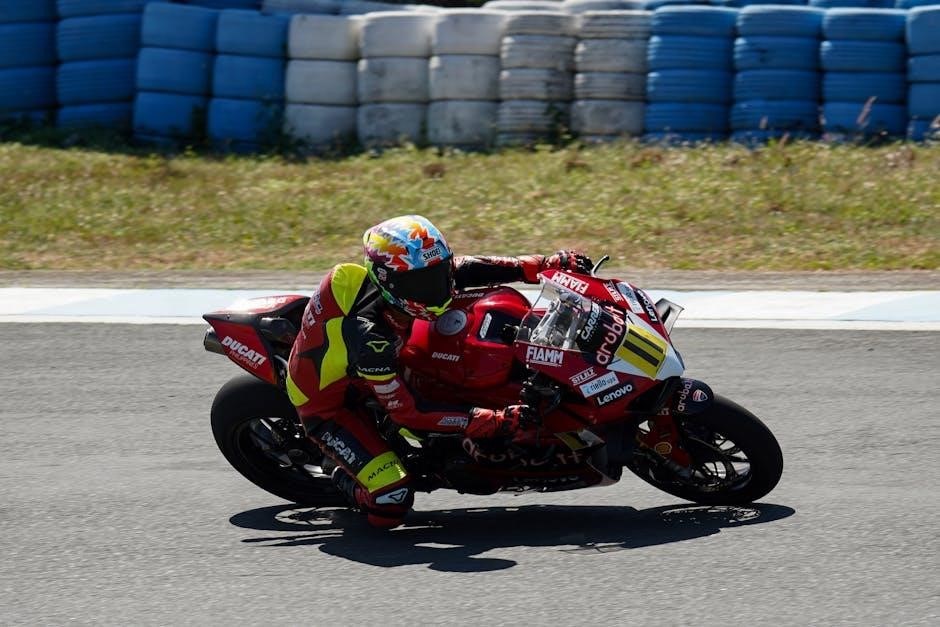
Your Ducati is a unique machine, tailored for a specific riding experience. This section focuses on the nuances of your particular model – be it a Multistrada, Monster, Panigale, or another iconic Ducati. While core principles remain consistent across the range, individual features and specifications vary significantly.
Carefully review the model-specific information detailed within this manual. Pay close attention to any unique controls, settings, or recommended operating procedures. Understanding these distinctions is crucial for maximizing performance and ensuring safe operation.
Refer to the vehicle identification number (VIN) to confirm your exact model year and configuration. This will help you access the most accurate and relevant information. Embrace the distinct character of your Ducati and prepare to experience the thrill of Italian engineering, perfectly suited to your riding style!
Key Components & Systems Overview
Ducati’s performance stems from a sophisticated interplay of key components. This section provides a foundational understanding of the major systems powering your motorcycle. We’ll explore the engine – the heart of your Ducati – detailing its configuration and core functionalities.
Next, we’ll delve into the chassis, encompassing the frame, suspension, and steering geometry, all crucial for handling and stability. The braking system, including ABS where equipped, receives dedicated attention, emphasizing safety and control. Finally, we’ll outline the electrical system, covering the battery, wiring harness, and essential sensors.

Familiarizing yourself with these core elements will empower you to diagnose minor issues, understand maintenance requirements, and appreciate the engineering brilliance behind your Ducati. This overview serves as a springboard for more detailed explorations in subsequent sections.
Engine Specifications & Maintenance
Your Ducati’s engine is a masterpiece of engineering, demanding meticulous care. This section details critical specifications – displacement, compression ratio, power output, and torque curves – providing a baseline for performance understanding. Regular maintenance is paramount for longevity and optimal function.
We’ll cover essential procedures like oil changes, crucial for lubrication and cooling, and air filter replacement, ensuring clean combustion. Proper spark plug inspection and replacement are also highlighted, impacting ignition efficiency. Adhering to the recommended maintenance intervals, outlined in the schedule, is non-negotiable.
Understanding valve clearances and timing belt service (where applicable) is vital for preventing catastrophic engine failure. Always use Ducati-approved fluids and parts to maintain warranty validity and ensure compatibility.
Oil Change Procedures
Maintaining optimal oil levels and quality is fundamental to your Ducati’s engine health. Begin by warming the engine to operating temperature for improved oil flow. Locate the oil drain plug, typically beneath the engine, and position a suitable oil pan. Carefully remove the plug, allowing the old oil to drain completely – this may take 20-30 minutes.
Next, replace the oil filter with a Ducati-approved unit, lubricating the gasket with fresh oil before installation. Reinstall the drain plug with a new crush washer, torquing it to the manufacturer’s specification. Finally, fill the engine with the correct quantity and grade of oil, checking the level with the dipstick.
Dispose of the used oil responsibly at a designated recycling center. Regular oil changes, as per the maintenance schedule, are crucial for preventing engine wear and ensuring peak performance.
Air Filter Replacement
A clean air filter ensures optimal engine performance and protects against abrasive particles. Begin by locating the airbox, typically positioned near the front of the motorcycle. Carefully remove the airbox cover, noting the position of any clips or fasteners. Gently remove the old air filter, observing its condition for signs of excessive dirt or damage.
Before installing the new filter, inspect the airbox for debris and clean it thoroughly. Apply a light coating of air filter oil to the new filter (if applicable, depending on filter type). Install the new filter correctly, ensuring a proper seal. Reattach the airbox cover, securing all clips and fasteners.
Regular air filter replacement, as outlined in the maintenance schedule, is vital for maintaining engine efficiency and longevity.
Spark Plug Inspection & Replacement
Maintaining optimal spark plug condition is crucial for efficient combustion and engine performance. Begin by disconnecting the spark plug wires, carefully labeling them to ensure correct reinstallation. Use a spark plug socket to remove the spark plugs, noting their condition – look for signs of fouling, wear, or damage.
Inspect the spark plug gap using a feeler gauge and adjust if necessary, referring to your model’s specifications. If replacing, install new spark plugs, tightening them to the manufacturer’s recommended torque. Incorrect torque can lead to engine damage.
Reattach the spark plug wires securely, ensuring a tight connection. Regular inspection and replacement, as per the maintenance schedule, will contribute to smooth engine operation and fuel efficiency.
Chassis & Suspension
The chassis and suspension are vital for handling, stability, and rider comfort. This section details maintaining these critical systems for optimal performance. Regularly inspect the frame for any signs of cracks or damage, paying close attention to weld points and stress areas. Ensure all fasteners are tightened to the specified torque values.
Proper tire pressure is paramount; consult the sticker on your motorcycle or your owner’s manual for the correct settings. Inspect tires for wear, damage, and proper tread depth. The suspension system, including forks and shock absorber, requires periodic checks for leaks and proper operation.
Adjusting suspension settings can significantly impact handling; refer to the suspension adjustment guide for detailed instructions tailored to your riding style and conditions.
Tire Pressure & Selection
Maintaining correct tire pressure is crucial for optimal handling, safety, and tire longevity. Always refer to the sticker located on the motorcycle’s frame or within your Ducati owner’s manual for the manufacturer’s recommended pressures for both front and rear tires. These pressures are specified for normal riding conditions and may vary based on load (rider and passenger plus luggage).
Regularly check tire pressure with a calibrated gauge, ideally before each ride and when the tires are cold. Incorrect pressure can lead to reduced grip, increased wear, and compromised stability. When selecting replacement tires, choose those that meet or exceed the original equipment specifications.
Consider your typical riding style and conditions when choosing tires – sport tires for aggressive riding, touring tires for long distances, or all-season tires for versatility.
Suspension Adjustment Guide
Ducati suspension systems are designed for performance, and proper adjustment enhances handling and comfort. Your owner’s manual details specific adjustment procedures for your model, covering preload, compression damping, and rebound damping. Preload adjusts the initial spring compression, influencing ride height and handling balance.
Compression damping controls the rate at which the suspension compresses, affecting how it responds to bumps and braking. Rebound damping controls the rate at which the suspension extends, influencing stability and control after compression. Start with the factory settings as a baseline.
Make small, incremental adjustments, testing after each change. Consider your weight, riding style, and road conditions when fine-tuning the suspension for optimal performance.
Brake System Maintenance
Maintaining your Ducati’s brake system is crucial for safety and performance. Regularly inspect brake pads for wear, ensuring sufficient material remains. Check brake fluid levels and condition; fluid should be clear and free of contaminants. Replace brake fluid every two years, or as specified in your owner’s manual, to prevent corrosion and maintain optimal braking force.
Inspect brake lines for cracks or leaks. Ensure brake rotors are clean and free from damage. Periodically check brake caliper operation, verifying smooth piston movement. Bleeding the brakes removes air bubbles, restoring firm lever feel.
Always use the recommended brake fluid type. If unsure about any maintenance procedure, consult a qualified Ducati technician.
Electrical System
Your Ducati’s electrical system powers essential functions, demanding careful attention. Begin by understanding the battery’s role – maintaining proper charge is vital for reliable starting and operation. Regularly inspect the battery terminals for corrosion, cleaning them as needed to ensure a solid connection.
Locate the fuse box; a diagram within your owner’s manual details each fuse’s purpose. Replace blown fuses only with those of the correct amperage. Troubleshoot lighting system issues systematically, checking bulbs, connections, and switches.
Be cautious when working with electrical components. Disconnect the battery’s negative terminal before performing any repairs. If you encounter complex electrical problems, seek assistance from a certified Ducati technician.
Battery Maintenance & Replacement
Maintaining your Ducati’s battery is crucial for reliable starting and optimal performance. Regularly inspect the battery terminals for corrosion; clean them with a baking soda solution and a wire brush if necessary. Ensure connections are tight and secure.
If your Ducati sits unused for extended periods, consider using a battery tender to prevent discharge. When replacing the battery, always disconnect the negative terminal first to avoid short circuits. Match the replacement battery’s specifications (voltage, capacity, and terminal type) exactly.
Properly dispose of old batteries at a designated recycling center. After installation, verify the charging system is functioning correctly. A healthy battery contributes significantly to your Ducati’s overall dependability.
Fuse Box Location & Diagram
Locating and understanding your Ducati’s fuse box is essential for addressing electrical issues. The fuse box is typically found under the seat, or near the battery compartment – consult your specific model’s documentation for the precise location.
Always disconnect the negative battery terminal before inspecting or replacing any fuses. A detailed fuse box diagram is usually printed on the fuse box cover itself, illustrating each fuse’s function (e.g., lighting, ignition, fuel pump).
Replace blown fuses only with fuses of the identical amperage rating. Using a higher amperage fuse can cause serious damage to the electrical system. Keep a spare set of fuses readily available for emergencies. Refer to the wiring diagram in this manual for further assistance.
Lighting System Troubleshooting
A malfunctioning lighting system compromises safety; address issues promptly. Begin by checking the bulbs themselves – a simple visual inspection often reveals a burned-out filament. If the bulb is good, examine the corresponding fuse (refer to the ‘Fuse Box Location & Diagram’ section).
Next, investigate the wiring harness for any loose connections or damaged wires. Use a multimeter to test for voltage at the bulb connector when the light switch is activated. If voltage is present, the bulb or its socket is likely the problem.
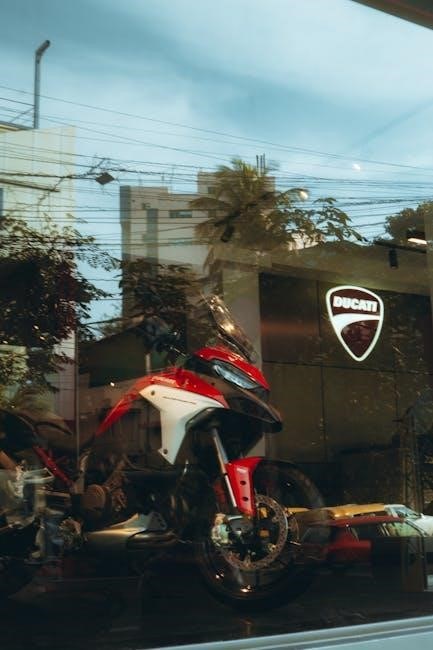
For more complex issues, such as intermittent flickering, suspect a faulty relay or switch. Consult the wiring diagram for specific component locations and testing procedures. Remember to prioritize safety and disconnect the battery before performing any electrical work.
Ducati Safety Features
Ducati prioritizes rider safety, integrating advanced systems into its motorcycles. Understanding these features is crucial for confident and controlled riding. Your Ducati may be equipped with Anti-lock Braking System (ABS), preventing wheel lockup during hard braking for enhanced stability.
Traction Control System (TCS) manages rear wheel spin, optimizing acceleration and reducing the risk of losing control, especially on slippery surfaces. Explore the various ‘Riding Modes’ – each adjusts power delivery, TCS intervention, and ABS sensitivity to suit different conditions and rider preferences.
Familiarize yourself with the operation and indicators of each system. Regular checks, as outlined in the ‘Routine Maintenance Schedule’, ensure optimal functionality. Always ride within your limits and prioritize safe riding practices.
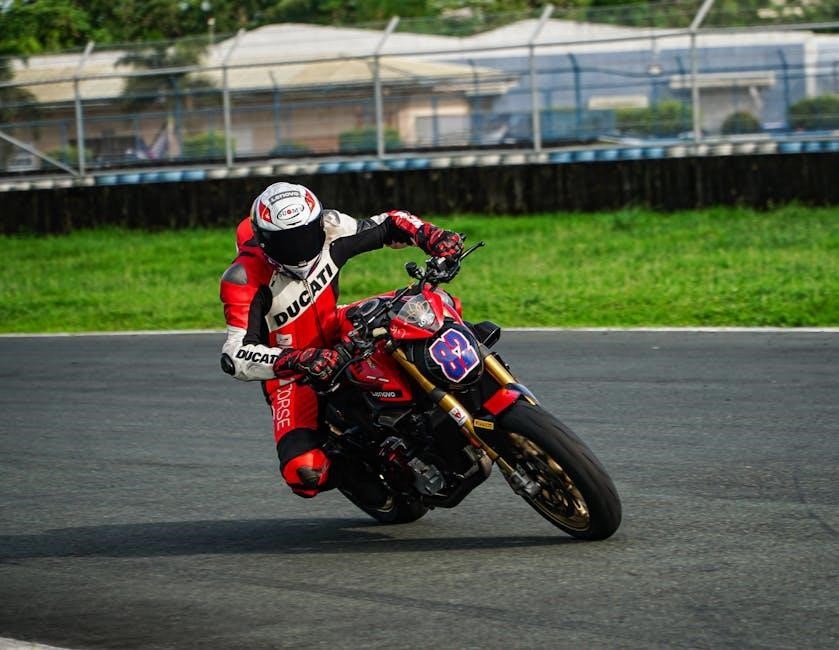
ABS System Operation & Checks
The Anti-lock Braking System (ABS) is a vital safety component, preventing wheel lockup during braking, maximizing stopping power and maintaining steering control. When activated, you’ll feel a pulsing sensation in the brake lever – this is normal and indicates the system is working.
During startup, a self-test confirms ABS functionality; a warning light illuminates briefly then extinguishes. If the light remains on, consult a qualified Ducati technician. Regularly inspect brake lines and calipers for leaks or damage.
Periodically check ABS sensor rings and wiring for cleanliness and integrity. Avoid harsh cleaning chemicals near sensors. Refer to the ‘Routine Maintenance Schedule’ for specific inspection intervals. Never disable the ABS system unless specifically instructed by a professional.
Traction Control System Explained
Ducati’s Traction Control (DTC) is engineered to maximize acceleration and rider safety by limiting rear wheel spin. It operates by analyzing wheel speed, throttle position, and lean angle, intervening to reduce power delivery when loss of traction is detected.
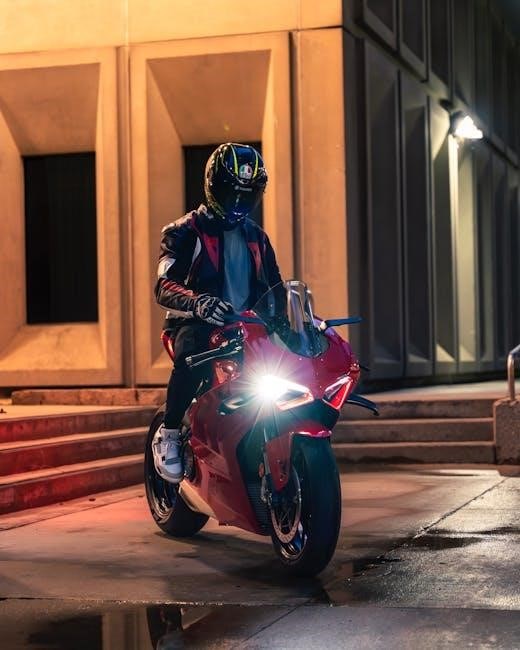
Multiple DTC levels are available, adjustable via the rider mode selector. Lower levels allow for more wheelspin, suitable for experienced riders or off-road conditions, while higher levels provide greater intervention for increased stability.
The system features a sophisticated algorithm, adapting to changing road conditions and riding styles. A DTC indicator light on the dashboard displays the active level. Remember to familiarize yourself with each setting and its impact on performance. Consult your dealer for personalized guidance.
Riding Modes & Their Impact
Ducati riding modes fundamentally alter your motorcycle’s behavior, tailoring performance to various conditions. Sport mode delivers maximum power and responsiveness, ideal for spirited riding. Street mode offers a balance between performance and comfort, suitable for everyday use.
Touring mode prioritizes comfort and fuel efficiency, with reduced power delivery and softer throttle response. Rain mode maximizes stability with significantly reduced power and increased DTC intervention, perfect for slippery surfaces.
Each mode adjusts parameters like power output, ABS sensitivity, and DTC levels. Customization is often available, allowing riders to fine-tune settings to their preferences. Understanding each mode’s impact is crucial for safe and enjoyable riding; Experiment responsibly and consult your dealer for optimal configuration.
Routine Maintenance Schedule
Maintaining your Ducati is vital for optimal performance and longevity. Every 600 miles (1,000 km), inspect chain slack, tire pressure, and all fluid levels. At 7,500 miles (12,000 km), perform a comprehensive service including oil and filter change, air filter inspection, and brake pad assessment.
Valve clearance checks are crucial around 15,000 miles (24,000 km), requiring specialized tools and expertise. Regularly inspect and lubricate cables, check for loose fasteners, and ensure all lights function correctly.
Adhering to this schedule, detailed in your owner’s manual, prevents costly repairs and ensures a thrilling riding experience. Record all maintenance diligently for warranty purposes and resale value. Professional servicing is recommended for complex tasks.
Troubleshooting Common Issues
Encountering problems? This section addresses frequent Ducati concerns. Difficulty starting often stems from a weak battery or faulty spark plugs – check connections and consider replacement. Unusual noises could indicate chain tension issues or exhaust leaks; inspect thoroughly.
Warning lights demand immediate attention; consult the owner’s manual for specific codes and actions. Overheating may signal coolant leaks or a malfunctioning radiator fan. Electrical glitches often trace back to blown fuses or corroded connections.
Remember, attempting complex repairs without proper knowledge can worsen the situation. Consult a qualified Ducati technician for diagnosis and resolution. Prioritize safety and refer to the manual before any intervention.
Warranty Information & Service Network
Your Ducati’s warranty provides peace of mind, covering defects in materials and workmanship for a specified period. Review the warranty booklet for detailed terms, conditions, and exclusions. Proper maintenance, as outlined in this manual, is crucial for warranty validity.
Locating authorized service centers is easy through the official Ducati website. These centers employ trained technicians with specialized tools and genuine parts. Scheduling service can often be done online or by phone.
Maintaining a service history is vital for resale value and warranty claims. Keep all receipts and documentation related to maintenance and repairs. Contact Ducati customer support for any warranty-related inquiries or assistance.
Ducati Accessories & Upgrades
Enhance your Ducati experience with a wide range of official accessories and performance upgrades. From aesthetic enhancements like tank pads and windscreens to functional additions such as luggage systems and exhaust upgrades, personalize your ride.
Genuine Ducati accessories are designed and tested to ensure compatibility and maintain the integrity of your motorcycle. Performance upgrades, like ECU remapping and aftermarket suspension components, can unlock additional power and improve handling.
Always consult a qualified Ducati technician before installing any performance upgrades. Improper installation can void your warranty or compromise safety. Explore the official Ducati online store or your local dealer for the latest offerings and expert advice.
Ducati Community & Resources
Connect with fellow Ducati enthusiasts and access a wealth of information through the vibrant Ducati community! Ducati owners’ clubs worldwide offer organized rides, technical support, and social events, fostering a strong sense of camaraderie.
Online forums and social media groups provide platforms for sharing experiences, troubleshooting issues, and discovering valuable tips and tricks. The official Ducati website features a dedicated owners’ section with access to service manuals, parts diagrams, and software updates.
Ducati’s customer support is readily available to assist with any questions or concerns. Leverage these resources to maximize your enjoyment and keep your Ducati performing at its best. Embrace the passion and knowledge of the Ducati family!